

A (Very) Brief History of Card Games and Gambling in General
The earliest card games are believed to have originated in China around 900 A.D., when the Chinese began shuffling and dealing paper dominoes and paper money into various combinations. The theory of the Chinese being the first civilization to develop card games is supported by the fact that paper was first invented in China as well.
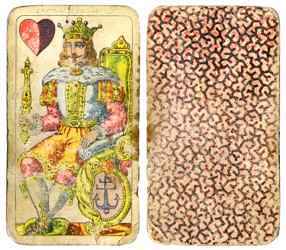
The four-suited decks with court cards first evolved in the Muslim world. Europeans imported them later, around the year 1370: the earliest authenticated references to playing cards in Europe date from 1377. At this time, the cards were hand-painted, and consequently only the wealthiest members of the population could afford them. Later, though, the invention of woodcuts made it possible for Europeans to mass-produce the increasingly popular gaming cards.
The cards we use today, with their suits of spades, diamonds, clubs and hearts, are derived from French designs. The French developed simple shapes and flat colors, to help facilitate manufacture; this is why French cards quickly became very popular and were exported widely. They became the standard in England, and their use expanded rapidly in the British Empire, particularly in North America.





We Recommend Playing at This Casino
Vegas Paradise
Devices
Mobile
Tablet
desktop
Live Dealers
100%
- Licensed by the UK Gambling Comission
- 100% Up To £200 in Deposit Bonus
- T&C Apply to Bonuses New Users Only, 18+ Site
- Good Variety Of Games From NetEnt, MicroGaming & Others
- begambleaware.org 18+

Software





 The first known accounts of gambling date from around 2300 B.C. It is believed that gambling, like playing cards, first originated in China. China and the rest of the Far East, though, were not the only parts of the world where gambling was known. In Ancient Greece gambling was also very popular—though it was illegal. Throughout history gambling always has often been illegal, and always been viewed with suspicion and disgust from at least portions of society.
In spite of this long-standing suspicion of gambling, though, some states in the western USA legalized the activity in the 1850s. Casinos soon followed, and Blackjack soon became one of the first widely popular casino card games. The rest of the States followed suit, though it took until the 20th century for many states to legalize gambling.
News From The Casino Industry
China Star Entertainment Recently Sold Lan Kwai Fong
China Star Entertainment has recently sold their Macau hotel property. Lan Kwai Fong is a casino that was recently purchased
Read More
Ireland Changes To Online Casino Regulation
Ireland plans to regulate the way that they handle both online casinos and gambling at large. The changes have influenced
Read More
Out of Control Casinos in Australia
Casinos in Australia will create more jobs. That’s the argument of Sunshine Coast Mayor, Mark Jamieson, whose proposal to build
Read More
Michigan Hopes Legalizing Online Gaming Will Pay Off
The door to legalizing online gaming in Michigan has swung open thanks to bills passed by the Michigan House Regulatory
Read More